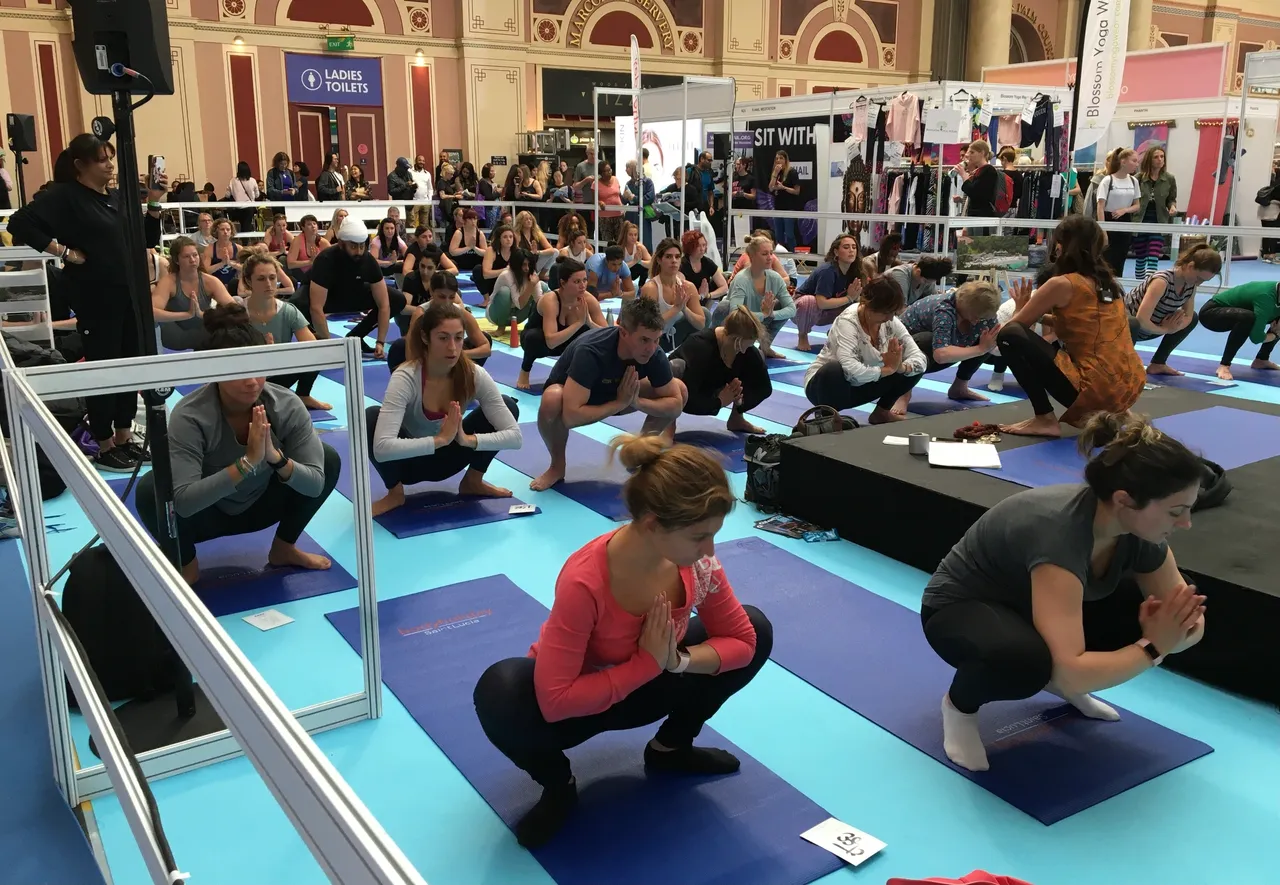
When I am teaching poses and in articular poses focusing on the hips, my body often makes a lot of cracks and pops noises that even my students can hear.
Sometimes, or maybe all the time, you creak, crack, pop, and snap. You may groan and complain about getting old, but noises are a normal part of life. Also it doesn't matter how much you practice, your body will still make those funny noises during your class and that's ok. And while the exact cause of these noises is uncertain, there are several possibilities.
The first is simple friction; when two things come together, get stuck, and then release, a sound is often created. An example is when you snap your fingers: your thumb and finger are initially stuck together, the pressure between them builds, and finally there is a release of tension with an audible click. This can also happen internally, between our tissues. A tendon or ligament may get temporarily caught up on another tendon or on a bumpy bone; as we move, the ligament tries to slip over the obstacle but can’t. Eventually, a high enough stress builds up and the ligament releases with an audible click. These friction sounds can be repeated over and over again right away, like cracking your knuckles or clicking your knees; no resting or refractory period is needed.
GAS BUBBLES MAY POP IN OUR JOINTS.
Most sounds from our sacrum or lower back are not caused by this kind of friction; their sources are more mysterious.
One source of sound is gas bubbles collapsing inside a joint capsule. The synovial fluid in our joints has a slightly lower pressure than the surrounding tissues of the body or the air pressure outside our body. The lower pressure serves to create a slight vacuum between the joints’ surfaces, keeping them together. Within this low-pressure environment, various gases can precipitate out of the synovial fluid, creating a small gas bubble. These bubbles are not able to escape the joint capsule, but sometimes (because the joint is under pressure or being moved) the bubbles collapse back into the synovial fluid. That collapse creates a popping sound. Once popped, it takes time for a new bubble to form, so these sounds cannot be repeated quickly.
There is another version of this theory, which proposes that the sound comes from the creation of the gas bubble, not its collapse. This is called cavitation, which means the creation of little cavities. In the world of engineering and dentistry, cavitation is a bad thing, because cavities weaken structures or cause metal fatigue. But in living joints, the collapse of cavities can feel rather nice. Many people pay good money to get their cavities cracked!
VACUUM SEALED JOINTS CAN ALSO POP.
Another possible source of the sounds we hear is the breaking of the relative vacuum that exists in a joint. Since the joints have lower internal pressure than the outside environment, when a joint is distracted and pulled apart, a release of the vacuum creates a popping sound. Have you ever stuck a suction cup against a smooth surface and then quickly pulled it off? Did you hear a pop? If a joint lubricated with synovial fluid is fixated, its smooth cartilaginous surfaces are held together via a vacuum, and when the fixation is broken, we get the same kind of pop.
There are still more possible sources of noise. Our softer tissues are also noisy. Muscles can create sounds when they contract and our fascia may also speak to us as well. When layers of fascia separate, they can make noises much like the sounds of popping bubble wrap (only in this case, the bubbles in the fascia contain water, not air).
So what causes those noises that you hear when the chiropractor adjusts your SI joints, or when you roll into a finishing twist at the end of your yoga practice? There is debate over whether any sound at all can come from an SI joint, as the amount of separation there may be simply too small. Sounds from that region are more likely to be coming from the facet joints between lumbar and the sacrum.
WHERE THE SOUNDS COME FROM IS LIKELY NOT WHERE WE EXPECT.
Some studies have shown that where we, or our therapists, think the sound comes from may not be the actual source at all. A therapist may target a specific lumbar joint for a good crack, but the sound created often comes from other joints. Indeed, the actual sound can be up to 14 cm away from the expected source. Since each lumbar vertebra has four facet joints, it is possible to get several cracks from one vertebra. One clue that a cavitation sound is being generated is the time that elapses between cracks; it often takes between 40 and 95 minutes before a cavitated joint can be cracked again. But the question remains: Did the adjustment create the sound in the targeted joint? And if not, was the adjustment useful?
IS IT HEALTHY TO CRACK OUR JOINTS?
Are the sounds your body creates during your yoga practice healthy? Some researchers do not believe there is any significance to the sounds—that the sounds are neither good nor bad, simply benign. The pop may feel good for some people, but few studies have correlated sounds with pain reduction. An adjustment that a therapist induces may help with a pathology or with reducing pain, but not all adjustments create a crack, and not all cracks are at the targeted location of the adjustment, so it is not surprising that cracking and pain reduction are not highly correlated.
Some researchers believe that after a cavitation has been heard, the joint is more mobile, but whether this mobility was caused by the noise or simply the adjustment is not certain. And, even if this is a quick and easy way to increase our range of motion, the increased mobility does not last. Before long, the pressure in the joint normalises and we crave another crack. So I said you can crack. pop, snap every time you practice yoga and it is perfectly fine.
I hope you learnt something about your body today by reading this blog.
Should you have any queries about this subject or any other subject, please do contact me directly.
Namaste
Christel


 Français
  English (UK)