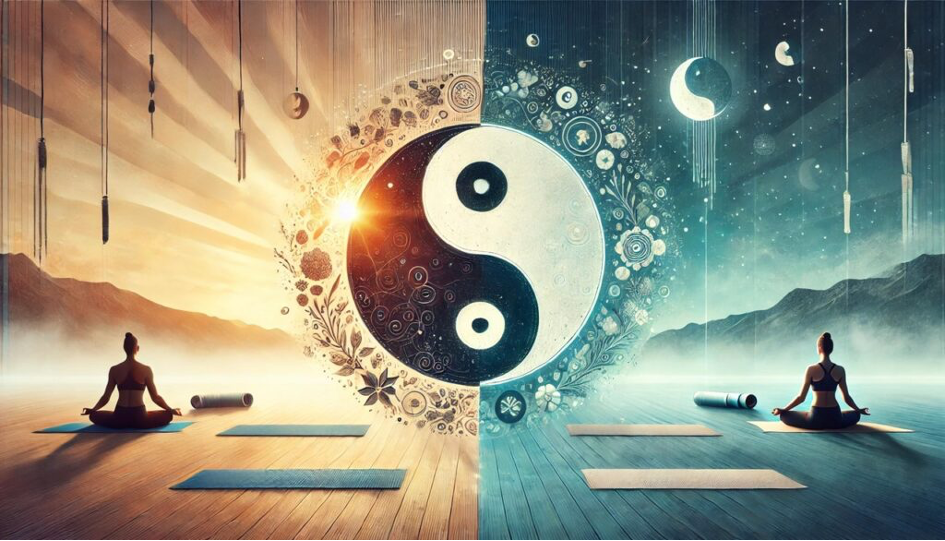
When it comes to practicing Yin Yoga, the question of timing often arises: “When is the best time to do Yin Yoga?” I often asked myself the same question. For a long time I thought it was best in the morning but then I realised it was as beneficial in the evening. So really the short answer is: it depends! But let's delve a bit deeper to explore why the timing of your practice can be so subjective and what factors you might want to consider when deciding the best time for you.
For many, the morning is a natural time to practice. After a night’s rest, our bodies tend to be less flexible, with tissues in a cooler, more contracted state. This can be an excellent time for a Yin Yoga practice, especially if you are looking to gently wake up the body and ease into your day. The coolness in your muscles and connective tissues can actually enhance the benefits of Yin Yoga, as the focus in this practice is not on stretching the muscles but on stressing the deeper connective tissues: fascia, ligaments, and joints.
Practicing Yin in the morning can also serve as a meditative start to your day. The slow, deliberate pace of Yin, combined with the stillness of the early hours, allows for a grounding and introspective experience. This can set the tone for a more mindful day ahead.
On the other hand, many of my students find the evening to be the ideal time for Yin Yoga. After a long day filled with physical and mental activity, Yin offers a way to unwind, release tension, and prepare the body and mind for rest. Your muscles are warmer and more pliable in the evening, which can make some of the deeper postures more accessible.
An evening Yin practice can be particularly beneficial for those who struggle with sleep. The calming nature of Yin Yoga, with its emphasis on long holds and slow breathing, helps activate the parasympathetic nervous system, often referred to as the “rest and digest” mode. This can lead to improved sleep quality and a deeper sense of relaxation.
If you have the flexibility in your schedule, a midday Yin practice can serve as a powerful reset. Whether you’ve been sitting at a desk, running errands, or dealing with the stresses of daily life, a short Yin session can help to recalibrate your energy levels and bring you back to a state of balance a bit like a short nap. The beauty of Yin Yoga is that it doesn’t require a lot of space or equipment, making it a perfect choice for a midday break, even in a small office or a quiet corner of your home.
The most common question in Yin Yoga is whether it’s better to practice when the muscles are cool or warm. I Thought for a long time it was best to practice with cold muscles but in fact the answer, again, is it depends. It depends upon your intention for the practice. If your goal is to stress the tendons, which are in series with the muscles, then practicing when the muscles are cool can be beneficial. The coolness allows the tendons to bear more of the stress, enhancing their strength and resilience.
However, if your intention is to stress the joint capsules and ligaments surrounding the joint, practicing when the muscles are warm may be more appropriate. Warm muscles allow for greater flexibility and access to deeper layers of connective tissue, which can help in targeting those areas more effectively. This distinction is essential for practitioners who wish to focus on different aspects of their body’s connective tissues.
Ultimately, the best time to practice Yin Yoga is the time that works best for you and your body. Everyone’s rhythm is different. Some people have more energy in the morning, while others feel more open and receptive in the evening. The key is to experiment and observe how your body responds to different times of the day. Notice how your energy levels, flexibility, and mental state change with the time of day, and adjust your practice accordingly.
Another aspect to consider is how Yin Yoga fits into your overall practice. If you’re engaging in more dynamic (Yang) activities such as Vinyasa or running, you might find that doing Yin Yoga afterward helps to balance your energy and prevent injury. Conversely, if you’ve had a particularly Yin day, maybe you’ve been sedentary or feeling low-energy, a morning or midday yang session might be just what you need to re-energise and refocus. This is why I offer a Yin yoga class in my local town of Saint-Gaudens every Tuesday evening after my Vinyasa class and the feedback from my students is that they love it as it is the perfect combination.
In the end, Yin Yoga is about finding stillness within yourself, no matter the time of day. The practice invites you to turn inward, listen to your body, and honour its needs. Whether you choose to practice in the morning, evening, or any time in between, the most important thing is that you make time for it. The benefits of Yin Yoga are timeless, so find the time that works for you and allow the practice to unfold naturally.
Remember your Yin practice is your own. Let it be a reflection of your unique rhythm, and you’ll find that the best time for Yin is truly the time that resonates with you.
For me now I practice mornings and evenings depending on my needs, mood and spare time.
I hope this article helped you decide for yourself when to practice Yin yoga and to reap the benefits of your practice exactly the way you wish to.
Namaste
Christel 🙏


 Français
  English (UK)