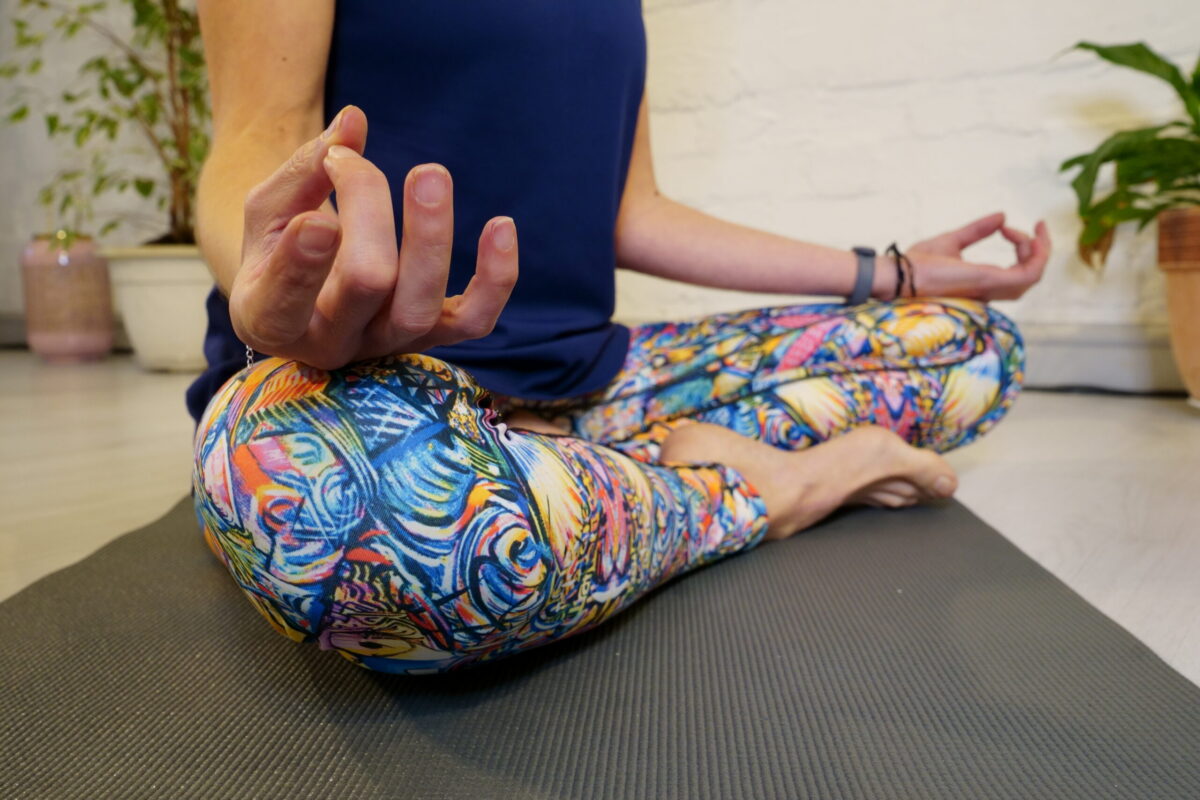
The world of yoga mudras, where the subtle language of the body takes centre stage. These silent expressions, used during meditation, asanas, and pranayamas, hold the power to shape our mental state and enhance our well-being.
What Are Mudras In Yoga?
In yoga, a mudra isn’t just a hand gesture; it’s like a symbol that connects to your inner feelings. Symbols show ideas visually, and mudras are like lively yoga symbols expressing different feelings inside you. For instance, consider the “Anjali Mudra,” where you bring your palms together in a prayer-like gesture. This mudra symbolises respect, gratitude, and the unity of opposites. When you perform the Anjali Mudra, it’s not just a hand movement; it’s like activating a symbol that brings forth a sense of reverence and connection within your yoga practice. Think of mudras as special hand movements in yoga. They don’t just make your body move; they also boost the energy flowing inside you. The word “mudra” means more than just a movement – it’s like sealing in energy. It helps keep the energy inside you, making your mind and body work together better.
Meaning And Significance
According to the ancient texts, the Sanskrit word ‘mudra’ comes from ‘mudam’ meaning ‘bliss’ and ‘drava’ meaning ‘to draw forth.’ This suggests that mudras possess the unique ability to draw out the hidden joy within us.
Engaging in a mudra directs the flow of Prana, or life force, in a rhythmic manner. The longer we maintain the mudra, the smoother the prana flow becomes. This rhythmic flow induces a shift in consciousness, fostering a serene state of mind.
How Many Types Of Mudras Are In Yoga?
In yoga, there are five types of mudras, each categorised by the body parts involved in creating the gesture. The most commonly practiced ones are hand mudras, known as “hasta mudra.”
Let’s explore each of these types of mudras one by one;
1. Hand Mudras
Hand mudras take precedence among various types, finding significant application in meditation and pranayama. Rooted in the five elements theory, these mudras are renowned for their therapeutic advantages.
In the practice of hand mudras, diverse gestures are formed using a combination of fingers, and practitioners often hold them for extended periods (see picture above).
2. Kaya Mudra (Postural Gesture)
Kaya mudras involve using your whole body to make a gesture, kind of like striking a pose. They’re also called postural gestures because, just like in different yoga poses, your entire body gets involved. Holding these mudras needs strong focus and concentration, much like when you’re holding a specific yoga position. For example: in Padmasana or Lotus pose, catch the left wrist by the right hand at the back and bend forward to forehead touching the ground.
3. Mana Mudra (Head Mudra)
Mana means head. Mana mudras are mudras in which sense organs (eyes, nose, tongue, lips and ears) are involved to form the gesture. They are widely used to focus the mind in meditation (mainly in kundalini meditation), hence called head mudras.
Head mudras are so powerful that they can snap out us from instinctive habits (which become an obstacle in meditation) even in short periods. An example is when the gaze is fixed down at the tip of the nose.
4. Bandha Mudra (Locks)
Bandha mudras involve using certain muscle locks called bandhas. These bandhas, when combined with mudras, engage specific skeletal muscles like those in your throat (vocal), chest (respiratory), and pelvis. By holding the life force or Prana using these muscle locks, it helps in kundalini awakening in your body. For example, in seated position bring the chin to the chest to lock the throat
5. Adhara Mudra (Perineal Mudra)
Adhara mudras engage the pelvic floor organs; “Adhara” translates to Perineal, earning them the name Perineal mudras.
By practicing Adhara mudras, you stimulate the sacral chakra, balancing sexual energy within the body. This practice aids in redirecting energy into the solar channel (Pingala Nadi). For example bring your focus on the muscles around genital organ and then with full efforts contract these muscles.
Benefits of Yoga Mudras
Mudras, powerful physical gestures in yoga, exert subtle effects on the body to replenish and revitalise energy. Each hand mudra corresponds to elemental energies, influencing specific brain centres. By balancing air, fire, water, earth, and ether elements, mudras facilitate healing and health restoration.
Various mudras offer diverse mind-body benefits, including:
Spiritually, mudras serve as a pathway to transcendental consciousness, with some having the potency to stimulate the third eye chakra. These hand gestures channel the body’s energy flow, awakening chakras and Kundalini.
A regular practice of mudras brings significant benefits:
How Do Mudras Work?
Mudra is the practice of influencing energy flow throughout the body using hand gestures. With the highest concentration of nerve endings, our hands create an ‘energy circuit’ when pressed or positioned in specific ways. This aligns our energy body through acupuncture meridians, promoting balance.
Hand mudras operate on the principle of the body’s five elements. Each finger represents a vital element. When a finger is pressed during mudra practice, it stimulates the corresponding element, fostering harmony within the body.
Yoga mudras play a crucial role in balancing energy within specific body parts, offering a mean to enhance or diminish energy as needed. By employing mudras, we gain the ability to regulate our energy and, in turn, maintain overall health and wellness through strategic manipulation of the body’s internal energy flow.
Mudras create a loop of flowing energy
Keeping hands or whole body in a mudra for an extended period creates the pranic circuit (a loop of energy) in our subtle body.
In yogic science, it’s said, the body gets diseases when prana (life-force) gets stuck in one place or there is a lack of prana in our body. The pranic circuit that a mudra makes keeps prana flowing indisputably inside our body. And, to prevent the lack of Prana, the loop that mudra creates doesn’t let Prana leaking out. This way a mudra helps in keeping the body diseases free, boost the energy level and enhances concentration.
Conclusion
Yoga mudra is a simple yet important practice of yoga because it gives you the ability to direct the energy within the body in different ways. The asanas and pranayamas can be understood as a preparatory practice that cultivates awareness of having Prana within us. Then comes the practice of mudras which lets you interact and manipulate the pranic energy.
This is the reason in hatha yoga tradition, mudras are practiced only after proficiency in Asana, Pranayama & Bandha.
I certainly hope this comprehensive blog is helping you understand the mudras better and all the benefits of their practice. I do intend to integrate their practice more and more in my classes.
Of course should you have any query about this subject or anything else, please do get in touch.
Namaste
Christel 🙏


 Français
  English (UK)